
March 30th
Another successful year in Venice. The Venice Writers’ Festival and Book Fair took place on 26-28 March, the last weekend of the month. There were several changes in our 14th year. The website, www.venicebookfair.com, provided a wealth of information, and we will expand and enhance it for 2027. Look for it before the holidays, when we begin taking registrations. We are looking to lock in dates in 2027, generally around the beginning of March. You’ll find it here once the state is set, and you can add it to your calendars.
The Writer’s Festival began on Thursday evening, March 26th, and was hosted by the Island Bookshop. A select panel talked about the craft of writing and the future of publishing. Always an amazing group of well-known authors with valuable insight. WE didn’t stop there. On Friday, March 27th, the Venice Main Library hosted four panels on a wide range of topics. The room was full of writers and prospective writers. Check out the attached newsletter to see who was there and what topics were addressed. Each panel fielded a long list of questions. Registration was for the festival only, as many people sign up for the Festival or the Book Fair alone.
While I’m on registrations, our efforts to “get the word out” through visits, emails, and press releases really paid off. In 2025, the number of registered authors required 40 tents. All genres and other related writing support (such as editing, audiobook production, and writing groups) were also participants. However, in 2026, we registered 80 authors and nearly 70 tents. The park setting on Saturday, March 28th, was a hit, as evidenced by the scores of critique sheets we received at the end of the fair. I’m now the chairman of the book fair and will look to increase the numbers in 2027. It is the premier book event on Florida’s southwest coast. If you are an author, look for the advance material and join the gang next March.
April 23rd
Spring is finally here, and the “spring breakers” have departed Florida to complete their final semester for the year. In fact, the “snow-birds” have all flown back home for the summer to the north (some back to Canada). It is the year-round residents in all the stores and restaurants. We do appreciate the temporary residents each year. To all who are enjoying the Spring and Summer in the cooler climates, “see you around October.”
During the recent annual book fair, the activities manager for the Aviva Senior Living Center stopped by my table (and tent, as the book fair was in Venice Park) to participate 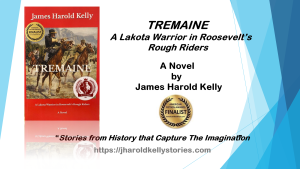 in their authors’ program. Each month, an author presents their latest work, usually at a book reading. It is much the same as one would do at a local bookstore. My presentation was today!
Although I have given these presentations in the past, this year I chose a new one for my latest novel, Tremaine: A Lakota Warrior in Roosevelt’s Rough Riders. The presentation included my start in this world of writers and key things I have learned over the past few years. To highlight lessons learned and interesting writing tips, I selected certain readings from Tremaine that highlighted each point.
I wanted to impress upon the folks attending that there are certain elements to the craft of writing with the reader in mind. The group thought the short piece on “Show versus Tell” when developing a story brings emotion and the desire to make the reader connect with the story or the character.
Show, don’t tell is 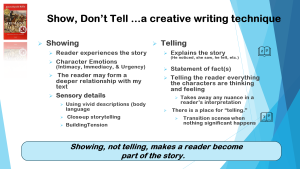 a writing technique in which story and characters are related through sensory details and actions rather than exposition. When done right, showing draws readers into the narrative with truly immersive description. It contributes to story development while also leaving certain elements to the reader’s interpretation,which is much more interesting than making everything explicit. (Though of course, you can still use language to alter their perception).
If you “tell” someone about an event, they’ll know the facts about what happened.On the other hand, if you “show” someone an event through specific details, they’ll feel like they experienced that event alongside the fictional characters who lived it.
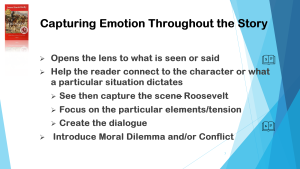 Emotion plays a significant role in Tremaine. Roosevelt selects him to serve as a guide for a hunting trip on the recommendation of a friend. His role as a guide and interpreter had limited prospects for the future. As much as Capron wanted him to stay, he supported Tremaine’s return to Missouri. Of course, a reader may ask, “What happens next if he leaves?” Enter a chance meeting between a Marshal and Tremaine in a dining room in Oklahoma City. Conflict creates Tension: a page-turner for readers.
